Paper Love: Held Together by Folds, Glue, and Softness

Paper Love
From scrapbooks and cranes to golden trees and waterfalls, this is a meditation on how handmade art holds love.
Estimated Read Time: 8 minutes
The Symbolism of Paper
Some traditions mark the first year of marriage with paper. Gold, silver, and gems are saved for later decades, once love has endured. I’ve always wondered about that choice. Paper feels fragile, but it holds possibility. It can tear, but it can also be folded, layered, and made into something lasting. Maybe that is the point. Early love is tender, unfinished, and held together by care. Perhaps paper is the most poetic gift of all — and perhaps that is why it keeps appearing in my art.
Scrapbooks and Beginnings

My first foray into paper craft came through a friend. My teammate had collected photographs and newspaper clippings from our volleyball season and gave me the scrapbook at the end of our season. Each page was layered with wins and losses, big and small moments. It remains one of the best gifts I’ve ever received.
Now, in the digital age, that scrapbook feels even more sacred. It’s the care in the collection of precious artifacts that moves me most.
I carried that lesson forward, making scrapbooks at baby showers. I brought blank pages, glue sticks, markers, and stickers, spreading the materials across a table and inviting each guest to make one page.
My only guidance: share your friendship origin story, offer advice for the new parents, and write a letter to the child.
One Thousand Paper Cranes

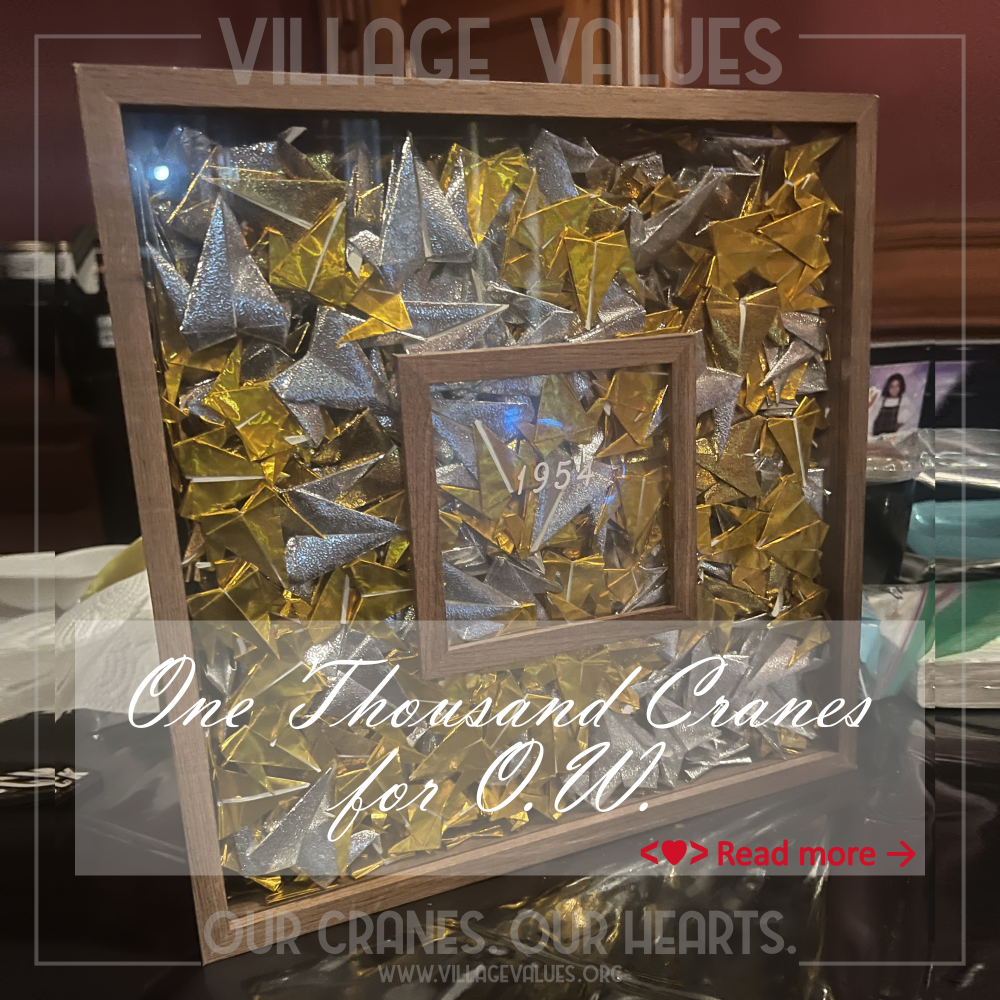
That impulse, to make meaning through paper, began much earlier, watching our mother fold paper cranes, a story shared in One Thousand Paper Cranes: How a Family Tradition Took Flight.
Folding cranes became a communal ritual of remembrance. My sisters and I folded, laughed and cried — and through it, we grew closer. The cranes carried reflection, care, and connection.
A Golden Tree’s Living Remembrance

When a friend’s father passed, we returned to the ache of our own loss — our father’s passing decades earlier. We felt the weight of grief, one that never departed, only transformed. We recalled how the death of flowers given with love added to the sadness; their beauty never lasted long enough. We longed for a way to keep others in mourning with us.
That same impulse behind our one-thousand-crane project evolved into the Living Remembrance memorials, where folding became tearing, gluing, and layering.
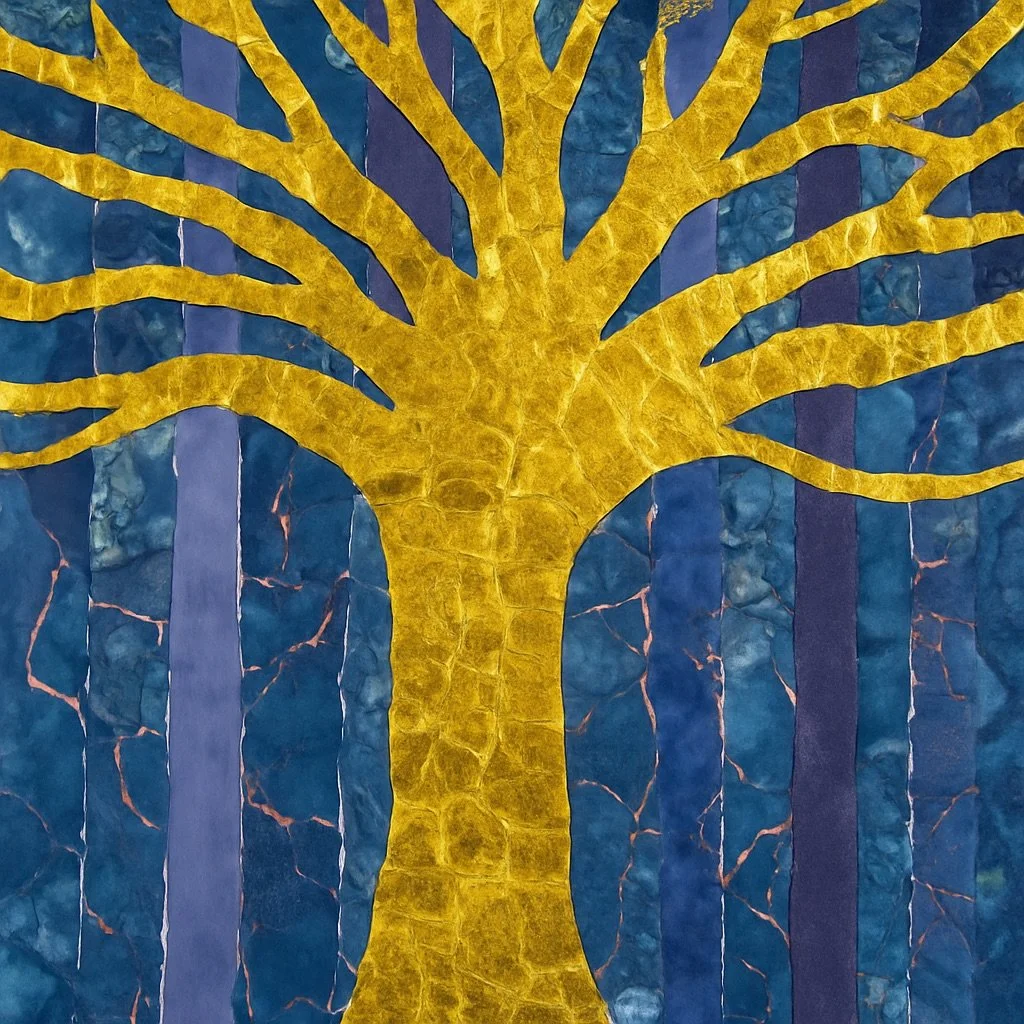
Our first Living Remembrance was a golden tree housed in a shadow box. We invited all who hurt to participate by writing on a leaf and dropping it through the top. The memorial was ongoing. And it would never wilt.
We began by selecting colors of the sky that matched our mood, then tore and glued strips of paper, trusting the chaos to add its own beauty. As our golden tree evolved, we smoothed its angles and followed each branch as it reached beyond the edge of the page. The gold represents the light that remains, even after loss.
A Waterfall’s Living Remembrance
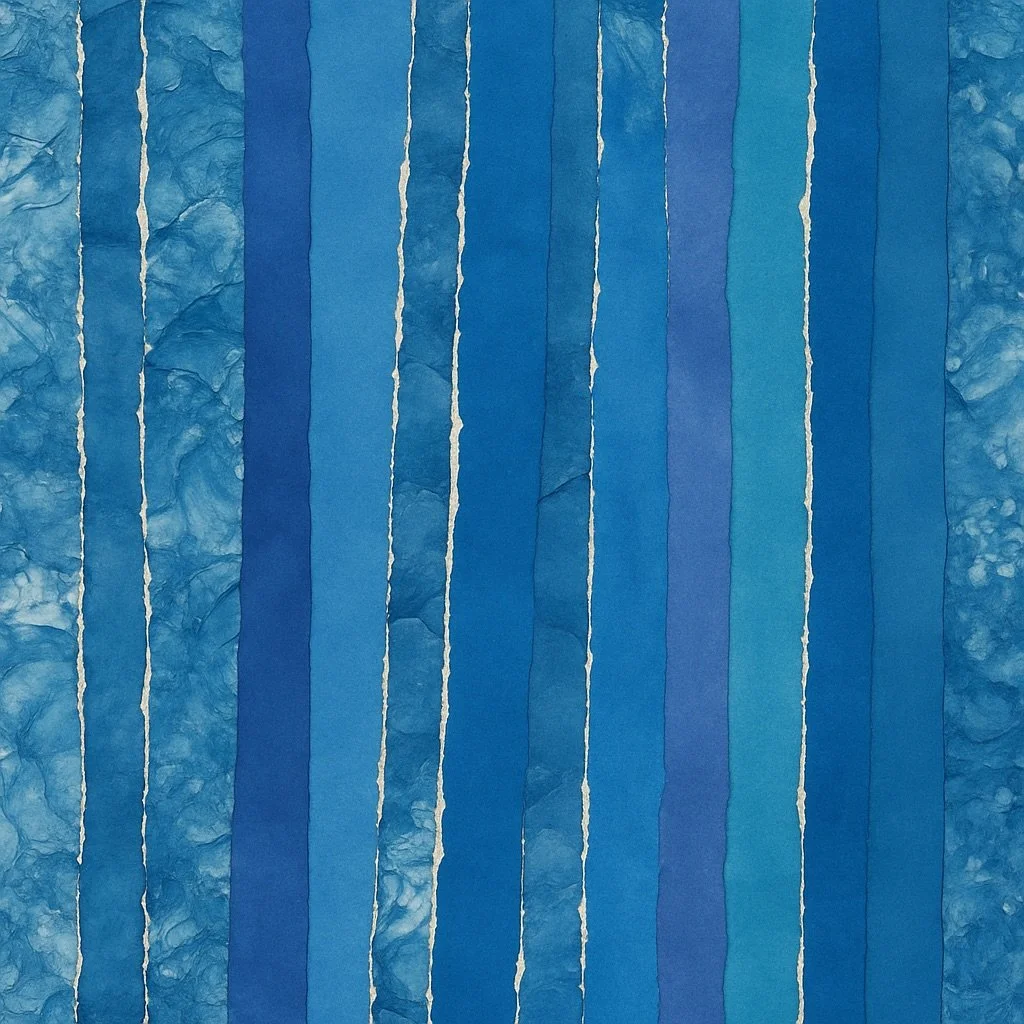

Our Waterfall Remembrance honored a friend whose life was cut short, but whose impact would last. Loved ones wrote notes on paper water drops. Because of him, we remember: every drop matters.
When a colleague passes and there is no pause, a dissonance emerges that tears at what makes us human. The work continues, but something else erodes.
This memorial created a space for colleagues to place their collective grief.
Each Living Remembrance is eventually given to a loved one, so that its tending may continue. We move forward, but we don’t forget.
Grief is lighter when we hold each other. Our trees, our waterfalls, our cranes — they’re just vessels. Our hope is that others will find their own ways to honor and remember, to create small sanctuaries of care in places that so often forget to pause.
Love deserves that space. So do we.
~ The Village Sisters
For Your Living Remembrance Memorial
There is no right way to grieve, only your way.
Gather a few things — a shadow box, paper, glue, scissors, and loved ones — and begin.
Suggested Materials & Simple Steps
Shadow Box
Purchase a top-loading shadow box (we found our 11 x 14 inch box at Michaels). The “top-loading” feature allows participants to easily add their contributions — or for recipients to open and reread messages.
Paper
For our backgrounds, we used “CT Publishing’s 333 Origami Sheets: Alcohol Ink Designs” — their luminous color patterns brought depth and movement, creating skies that felt alive. (Consider us “Another Maker Inspired!”)
The textured gold foil origami paper sheets for our trees were purchased online through Amazon.
For our leaves, we used this leaf template printed on Solid Core Paper Pack by Recollections™: Feathered Green (24 lb).
For our water drops, we used this water drop template printed on Solid Core Paper Pack by Recollections™: Cape Cod (24 lb).
Directions
Open the shadow box and remove the product sheet — the paper insert with the description. This will serve as your background base, as it fits the exact dimensions of your shadow box.
Once you’ve selected your colors, begin tearing and gluing the strips to the product sheet.
For our tree, we let the gold strips dictate the bends in the branches, allowing them to extend beyond the edges of our product sheet. Your tree is yours to shape.
After the glue dries, trim any excess paper extending beyond the edges, then glue the finished background to the cardboard backing of the shadow box.
Once dry, reassemble the shadow box by replacing the backing.
For the leaves and water drops, print your designs onto your chosen colored paper. Then cut each out, leaving a small allowance around each shape.
Place the finished leaves or drops in a bowl beside the shadow box, along with a note inviting participation.
Extras
Some have added pictures of loved ones. Others have glued select leaves or drops directly to the background.


A Living Remembrance: Honoring the Love that Remains
“Gold represents the light that remains, even through loss. Formed by tearing and layering paper, it honors the way beauty can rise from chaos — how light can shine through the cracks.”
Also from Our Village